
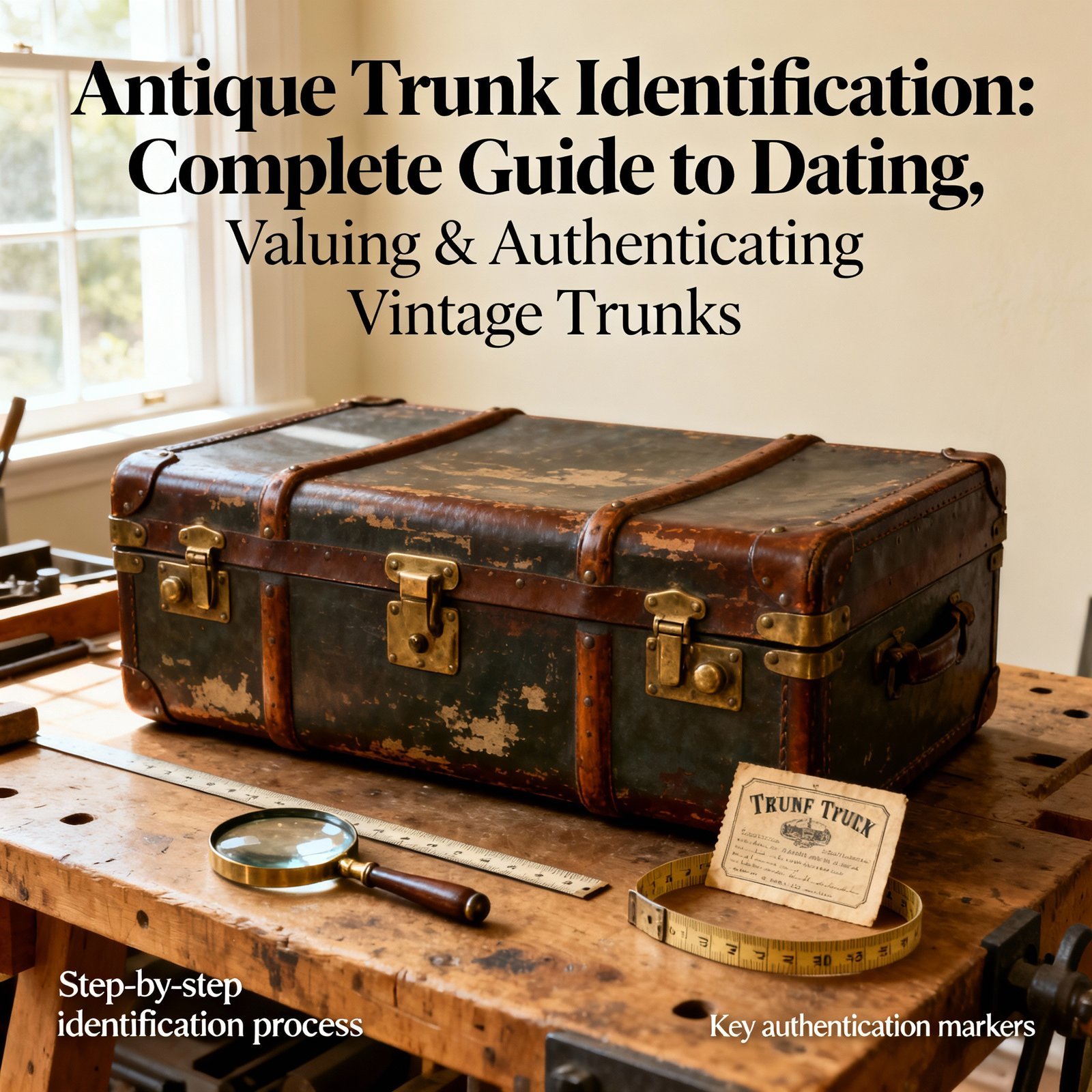
Understanding Antique Trunk Identification
Studies at museum collections have found that antique trunk identification is both an art and a science that requires knowledge of construction methods, materials, hardware styles, and manufacturer markings spanning over 150 years of trunk-making history. This comprehensive guide will teach you how to accurately identify, date, and value antique trunks from the mid-1800s through the early 1900s
Studies at recent auction results have found that whether you’ve inherited a family heirloom trunk, discovered one at an estate sale, or are building a collection, understanding the key identification markers will help you determine authenticity, manufacturer, approximate age, and current market value. The trunk market has evolved significantly, with rare specimens from prestigious makers like Louis Vuitton, Moynat, or Goyard commanding premium prices, while more common domestic trunks remain accessible to beginning collectors

Key Elements of Trunk Identification
Trunk Construction Methods and Materials
As noted by restoration specialists, the construction materials and methods provide crucial clues for dating antique trunks. Early trunks (pre-1870) typically featured dovetailed wooden construction with hand-forged iron hardware and hand-cut nails. As manufacturing evolved, you’ll find machine-cut nails (post-1885), stamped steel hardware, and eventually lightweight materials like vulcanized fiber and pressed paper
Examine the trunk body construction carefully. Flat-top trunks dominated the market from 1870-1900, while dome-top or barrel-top trunks were popular from 1880-1920. The transition to wardrobe trunks occurred around 1900-1920, featuring internal hanging rods and drawer compartments. Steamer trunks, designed for ocean travel, were typically lower-profile (under 14 inches tall) to fit beneath ship berths.

Hardware Styles and Dating
Hardware provides one of the most reliable dating methods for antique trunk identification. Here’s a chronological breakdown of common hardware styles:
- Pre-1870: Hand-forged iron hardware, simple lock mechanisms, hand-cut nails, leather or rope handles
- 1870-1890: Transition to machine-stamped hardware, ornate pressed tin designs, introduction of spring-loaded locks, machine-cut nails
- 1890-1910: Highly decorative stamped steel hardware, brass plating common, Yale locks becoming standard, corner bumpers and reinforcement plates
- 1910-1930: Simplified hardware designs, nickel plating popular, barrel locks standard, leather or fiber handles replacing rope
- 1930-1950: Chrome-plated hardware, simplified designs, integrated lock/latch systems, plastic components beginning to appear
Pay special attention to lock mechanisms. Early trunks used simple barrel locks or padlock hasps. By the 1890s, most quality trunks featured Yale locks or similar pin-tumbler designs. The presence of a working original lock with key can significantly increase a trunk’s value. See also: antique furniture identification.

Manufacturer Identification and Maker’s Marks
Locating Maker’s Marks and Labels
Manufacturer marks are the Holy Grail of antique trunk identification, definitively establishing provenance and often dramatically affecting value. Check these locations systematically:
- Interior lid: Most common location for paper labels, stamped marks, or stenciled names
- Interior back wall: Often contains manufacturing date stamps or serial numbers
- Lock mechanism: High-end manufacturers often marked their proprietary locks
- Corner brackets: Some makers stamped their initials or logos on metal hardware
- Under interior trays: Hidden marks sometimes placed beneath removable compartments
- Exterior sides or front: Luxury makers like Louis Vuitton used prominent exterior monograms
Original paper labels are incredibly fragile. If you find one, photograph it immediately and avoid touching it excessively. Even partial labels can help identification – note any visible text, graphics, or color patterns. Many labels included the manufacturer’s address, which can help date the trunk since companies frequently relocated.

Major American Trunk Manufacturers
Understanding the major manufacturers helps contextualize your trunk within the historical market. Here are the most significant American trunk makers:. For additional details, check out value guide.
- MM Secor (Racine, WI): One of the largest American manufacturers (1887-1920s), produced high-quality steamer and wardrobe trunks with distinctive duck canvas covering and ornate hardware
- Hartmann Trunk Company (Racine, WI): Still in business today, known for exceptional quality leather and vulcanized fiber trunks (founded 1877)
- Seward Trunk (Petersburg, VA): Founded 1878, specialized in wardrobe trunks with innovative interior fittings, continues manufacturing today
- Belber Trunk & Bag (Philadelphia, PA): Major East Coast manufacturer (1860s-1950s), quality mid-range trunks with distinctive green duck canvas
- Innovation Trunk Company (Oshkosh, WI): Known for innovative wardrobe trunk designs with extensive interior organization (1890-1930s)
- Shwayder Brothers (later Samsonite, Denver, CO): Began 1910, revolutionized trunk making with vulcanized fiber and lightweight materials
European Luxury Trunk Makers
European manufacturers, particularly French makers, represent the pinnacle of trunk craftsmanship and command premium prices in today’s market:
- Louis Vuitton (Paris, France): Founded 1854, the most iconic and valuable trunk maker. Distinctive monogram canvas introduced 1896, earlier pieces feature plain canvas or Damier check pattern. Authentic LV trunks feature brass locks stamped with the LV logo and serial numbers inside
- Goyard (Paris, France): Founded 1853, known for distinctive chevron pattern and hand-painted personalization. Extremely rare and valuable, often exceeding Louis Vuitton prices
- Moynat (Paris, France): Founded 1849, produced exceptional quality trunks with distinctive trapezoidal shape. Became dormant in 1970s, recently revived
- Au Départ (Paris, France): Late 19th century luxury maker, featured unique metal corner designs and custom interiors
- Innovation (Paris, France – not to be confused with American Innovation): Known for sophisticated mechanical interior systems and lightweight aluminum construction
Authenticating European luxury trunks requires expertise, as reproductions and counterfeits exist. Examine hardware quality, construction precision, and seek expert authentication for high-value pieces.
Dating Your Antique Trunk
Chronological Style Guide
Even without manufacturer marks, you can estimate a trunk’s age by analyzing style characteristics across different eras:. Read more in our Victorian furniture guide.
1850-1870 (Early Victorian Period): Predominantly wooden Jenny Lind-style trunks with domed tops, hand-forged hardware, decorative embossing or painted designs, leather or iron strapping. These early pieces are relatively rare today. Construction quality varies widely based on custom-made versus factory origins.
1870-1890 (High Victorian Period): Introduction of flat-top trunks designed to stack efficiently on trains and steamships. Ornate embossed tin or metal covering became popular, often in elaborate patterns. Machine-manufactured hardware becomes standard. Canvas-covered wooden trunks emerged as the dominant style. Interior compartments and removable trays become common features.
1890-1910 (Golden Age of Trunk Travel): Peak production period with greatest variety. Steamer trunks optimized for ocean travel, dome-tops for rail journeys, wardrobe trunks for extended stays. Vulcanized fiber and pressed paper replacing heavier wood. Elaborate interior fittings with specialized compartments. High-quality locks become standard. Canvas covering often features decorative patterns or embossing. Learn more about restoration specialists.
1910-1930 (Wardrobe Trunk Era): Upright wardrobe trunks dominate market, featuring hanging rods, multiple drawers, and mirror assemblies. Simplification of external decoration. Transition to lighter materials continues. Introduction of leather and fiber composite materials. Hardware becomes more streamlined and functional rather than decorative.
1930-1950 (Decline and Transition): Automobile travel replaces rail, leading to smaller, lighter luggage. Last gasp of trunk manufacturing with very basic utilitarian designs. Introduction of modern suitcase forms begins. Many trunk manufacturers transition to modern luggage or cease operation.
Using Nails and Fasteners for Dating
The type of nails used in trunk construction provides surprisingly precise dating evidence:
- Hand-forged nails (pre-1790): Extremely rare in trunks, irregular shape, hand-hammered heads
- Cut nails (1790-1890): Square shaft, blunt point, machine-cut but hand-headed, found in trunks through 1880s
- Wire nails (1885-present): Round shaft, sharp point, became standard by 1890s, still used today
- Brass or copper nails: Decorative or functional use on high-end trunks, time period varies
- Combination: Trunks repaired or modified over time may show multiple nail types
Examine nails on the interior back panel and under metal hardware plates where they’re most visible. The transition from cut to wire nails occurred gradually, with some manufacturers using cut nails into the early 1900s.
Antique Trunk Value Assessment
Factors Affecting Trunk Value
Current market value for antique trunks varies enormously based on multiple factors. Understanding these elements helps establish realistic value expectations:
Manufacturer and Provenance: This is the single most significant value factor. A documented Louis Vuitton trunk can sell for $5,000-$50,000 or more, while a common unmarked American steamer trunk might bring $100-$400. Provenance connecting a trunk to historical figures or events can multiply value significantly.
Condition and Completeness: Original condition dramatically affects value. A fully restored trunk may be more displayable but typically sells for less than an unrestored trunk in excellent original condition. Missing or replaced hardware reduces value by 30-50%. Interior paper labels, trays, and original keys add significant value. Professional restoration costs $500-$2,000 for comprehensive work.
Rarity and Desirability: Unusual sizes, shapes, or special features increase value. Wardrobe trunks with exceptional interior fittings, small lady’s trunks, or oversized theatrical trunks command premiums. Regional variations and limited production runs create collectible niches.
Aesthetic Appeal: Visual impact matters in today’s market where trunks serve as decorative furniture. Trunks with striking graphics, unusual colors, or distinctive design elements sell for premium prices regardless of manufacturer.
Current Market Value Ranges
These value ranges reflect typical 2024 market prices for antique trunks in good, unrestored condition with original hardware:
- Common American steamer trunks (1890-1920): $150-$400, higher for exceptional graphics or unusual features
- Named American manufacturers (MM Secor, Belber, Seward): $300-$800, premium for wardrobe trunks with complete interiors
- High-end American makers (Hartmann, Innovation): $500-$1,500, exceptional examples to $3,000
- European luxury brands (Louis Vuitton, Goyard): $3,000-$50,000+, authenticated pieces with documentation most valuable
- Small specialty trunks (hat boxes, shoe trunks, jewelry cases): $200-$1,200 depending on maker and condition
- Dome-top or barrel-top trunks (1870-1900): $250-$600, decorative embossing adds value
- Jenny Lind or early Victorian trunks (pre-1870): $400-$1,200, rare examples with original paint higher
Remember that these are general guidelines. Regional markets vary, and individual features can significantly affect value. Auction results provide the most reliable current market data.
Condition Assessment and Grading
Structural Condition Evaluation
Systematically evaluate structural condition before purchasing or valuing an antique trunk. Here’s what to examine:
Frame and Body Integrity: Check for solid, non-warped wooden frame. Gentle pressure should reveal no flexing or weakness. Examine corner joints – dovetails should be tight with no separation. Look underneath for water damage, rot, or insect damage. Separated slats or broken framework significantly reduce value and may not be economically repairable.
Hardware Functionality: Test all latches, locks, and hinges. Original working hardware is ideal, but frozen mechanisms can often be restored. Missing pieces present challenges – replacement antique hardware rarely matches perfectly. Handles should be secure with no cracking or separation from mounting points.
Covering Condition: Canvas, leather, or metal covering should be substantially intact. Small tears or wear are acceptable and add character. Extensive deterioration, especially with exposure of underlying wood, indicates poor storage conditions. Missing sections of metal embossing or severe rust affects both value and restorability.
Interior Preservation: Original paper lining, compartments, and trays significantly enhance value. Water staining is common but should be superficial. Severe interior deterioration suggests water damage that may have affected structural integrity. Original labels or stenciling should be preserved at all costs.
Condition Grading Standards
The antique trunk market uses these general condition grades:
- Museum Quality/Mint: Exceptional original condition, all hardware present and functional, minimal wear, complete interior, original keys. Extremely rare. Represents top 1% of available trunks.
- Excellent: Very good original condition, all major components present, minor wear consistent with age, no significant damage. Working locks preferred but not required. Top 10% of market.
- Good: Solid structural condition, some wear and minor damage acceptable, most hardware present (replacements acceptable for non-visible pieces), may need minor restoration. Represents 30% of market.
- Fair: Structurally sound but shows significant wear, some missing or replaced hardware, covering may have damage, needs restoration for display quality. Still collectible. 40% of market.
- Poor/Project: Significant damage, missing components, structural issues, suitable only for parts or complete restoration project. Value primarily in rare components or special features. 20% of market.
Always assess condition honestly. Overstating condition damages seller reputation and leads to buyer disputes. When in doubt, grade conservatively and let photographs speak for themselves.
Authentication and Avoiding Reproductions
Spotting Modern Reproductions
The market contains numerous reproduction trunks, particularly copying luxury makers like Louis Vuitton. Here’s how to identify reproductions:
- Hardware tells the story: Reproduction hardware appears too new, lacks appropriate wear patterns, often uses incorrect fastener types (Phillips head screws didn’t exist in the trunk era)
- Canvas and covering materials: Modern canvas has uniform texture and coloring impossible in period manufacturing. Authentic antique canvas shows irregular weaving and natural fiber variations
- Aging appears artificial: Reproductions often feature distressing that looks applied rather than accumulated naturally. Real age shows consistent wear patterns in high-contact areas
- Construction shortcuts: Reproductions use staples, modern glues, or simplified corner joints. Examine hidden areas for anachronistic materials or methods
- Price seems too good: If a trunk appears to be high-end luxury manufacture but sells for mid-range prices, investigate authenticity carefully
- Seller knowledge: Legitimate sellers of authentic antique trunks can discuss provenance, manufacturing details, and identification features. Vague or evasive responses raise red flags
For high-value trunks (over $2,000), consider professional authentication. Several specialists offer authentication services, particularly for Louis Vuitton and other luxury makers.
Verifying Luxury Brand Authenticity
Louis Vuitton and other luxury trunk makers face extensive counterfeiting. Use these authentication markers:
Louis Vuitton Authentication: Genuine LV trunks feature hand-applied monogram canvas (not printed), brass hardware stamped ‘LOUIS VUITTON’ with consistent depth and clarity, serial numbers that match manufacturing records (LV maintains archives), and construction quality that exceeds reproductions. The canvas pattern alignment should be precise and consistent. Interior lining shows specific weaving patterns that evolved over time. Lock mechanisms feature specific brass alloys and manufacturing marks.
Goyard Authentication: The chevron pattern should be hand-painted with slight irregularities proving hand application. Personalization, when present, is always hand-painted. Hardware bears specific markings and uses particular brass alloys. Goyard rarely marked trunks internally, making authentication more challenging.
When investing significant money in luxury trunks, work with established dealers who guarantee authenticity or seek independent expert authentication. Join collector forums and study authenticated examples to develop recognition skills.
Care and Preservation of Antique Trunks
Cleaning and Maintenance
Proper care preserves both condition and value. Follow these guidelines for different materials:
Canvas-covered trunks: Vacuum gently with soft brush attachment to remove dust. For spot cleaning, use barely damp cloth with mild soap, testing in inconspicuous area first. Never soak canvas as this can cause wood swelling and separation. Allow to dry completely before closing. Avoid commercial cleaners which can damage period materials.
Leather components: Use leather conditioner sparingly on handles and trim – never on painted or decorated areas. Saddle soap works for dirty leather but test first. Avoid over-conditioning which can darken leather. Apply conditioner 1-2 times per year maximum for trunks in climate-controlled environments.
Metal hardware: Light tarnish is acceptable and proves authenticity. For cleaning, use non-abrasive metal polish appropriate to the metal type (brass, steel, or nickel). Remove polish residue completely. Never use steel wool or abrasive pads. Frozen locks can sometimes be freed with penetrating oil, but proceed carefully to avoid damage.
Interior preservation: Never use water on paper linings. Vacuum gently using cheesecloth over the nozzle to prevent suction damage. Consult paper conservation specialists for significant deterioration. Original labels should never be touched or cleaned – photograph them and leave them alone.
Storage and Display
Environmental conditions critically affect long-term preservation:
- Temperature and humidity: Maintain 65-70°F with 40-50% relative humidity. Fluctuations cause expansion/contraction damage. Avoid basements (too damp), attics (too hot), or garages (extreme fluctuation)
- Light exposure: UV light fades canvas, paper, and leather. Keep trunks away from direct sunlight. Use UV-filtering window film in display areas
- Positioning: Support trunks on stable platforms – not directly on floors where moisture can wick up. Ensure adequate air circulation around all sides
- Functional use: Antique trunks can serve as coffee tables, storage, or display pieces, but avoid overloading. Weight limits vary by construction – generally 50-100 pounds maximum for flat-top trunks
- Pest prevention: Check regularly for moths, beetles, or mice. Cedar blocks help deter insects but keep away from direct contact with materials. Never use chemical pesticides which can damage period materials
If storing items inside a trunk, use acid-free tissue paper to protect both trunk and contents. Avoid storing anything that could off-gas or cause chemical reactions (rubber, vinyl, modern plastics).
When to Restore vs. Preserve As-Is
Restoration decisions significantly impact both value and historical integrity. Consider these factors:
Arguments for preservation as-is: Original condition, even with wear, often commands higher prices from serious collectors. Period materials and finishes cannot be perfectly replicated. Original patina and aging provide authenticity. Restoration costs may exceed value increase.
When restoration makes sense: Structural repairs preventing further deterioration. Trunks intended primarily for decorative use. Damage so severe the trunk cannot be displayed. Missing components affecting functionality (broken hinges, missing handles). Clear potential to increase value beyond restoration costs.
Restoration best practices: Use period-appropriate materials and techniques. Document all work photographically. Preserve original components even if replaced. Consider reversible restoration methods. Work with specialists experienced in antique trunk restoration, not general furniture refinishers.
For valuable trunks (over $1,000), consult multiple restoration specialists before proceeding. Poor restoration can permanently destroy value.
Building Your Antique Trunk Collection
Where to Find Antique Trunks
Strategic sourcing helps build quality collections at reasonable prices:
- Estate sales: Often the best value, especially at late-stage markdowns. Trunks may have family provenance. Arrive early for best selection
- Antique shows and flea markets: Allows hands-on inspection and negotiation. Build relationships with dealers who’ll watch for specific wants
- Online marketplaces (eBay, Etsy, Facebook Marketplace): Vast selection but requires careful authentication. Request additional photos of hardware, labels, and construction details. Factor shipping costs – trunks are heavy and expensive to ship
- Auction houses: Best source for luxury brands and documented provenance. Preview items in person when possible. Set maximum bids and stick to them
- Antique malls and shops: Higher prices but often better guarantees. Dealers typically know their inventory and can answer identification questions
- Architectural salvage yards: Overlooked source for trunks sold as decorative items. May find bargains from sellers unfamiliar with trunk values
Developing Collection Focus
Focused collections tend to be more valuable and satisfying than random accumulation:
- Manufacturer focus: Specialize in one maker (Hartmann, Seward, etc.). Deep knowledge enables better finds and authentication
- Era specialization: Focus on specific period (Victorian, Edwardian, Art Deco). Develops expertise in dating and styles
- Type collection: Wardrobe trunks only, steamer trunks, small specialty trunks. Allows comparison of variations within category
- Regional manufacturers: Collect trunks made in your region. Local history creates personal connection and may access local estate sales
- Decorative themes: Graphics-focused collection emphasizing visual appeal over manufacturer. Can be displayed thematically
Whatever focus you choose, develop expertise through research, joining collector groups, and studying museum collections. The International Trunk & Luggage Museum provides excellent resources, and online communities share identification help and market insights.
Frequently Asked Questions About Antique Trunk Identification
How can I identify my antique trunk?
Start by examining the trunk for manufacturer labels or marks, typically found on the interior lid or back panel. Analyze the hardware style, construction method, and materials used. Check for hand-cut versus wire nails, which helps date trunks to before or after 1890. Study the overall shape (flat-top, dome-top, or wardrobe style) and covering materials (canvas, leather, metal, or vulcanized fiber). Compare your findings to known manufacturer characteristics and period styles documented in this guide.
What are antique trunks worth?
Antique trunk values range from $100-$400 for common American steamer trunks to $5,000-$50,000+ for authenticated luxury brands like Louis Vuitton or Goyard. Value depends on manufacturer, condition, rarity, completeness of original components, and aesthetic appeal. Named American manufacturers (MM Secor, Hartmann, Seward) typically sell for $300-$1,500. Complete wardrobe trunks with all interior fittings command premium prices. Always research recent auction results for comparable examples to establish current market value.
How old is my trunk?
Date your trunk by examining construction details: hand-cut nails indicate pre-1890, wire nails post-1885. Flat-top trunks dominated 1870-1900, dome-tops 1880-1920, and wardrobe trunks 1900-1930. Hardware styles evolved chronologically – ornate Victorian hardware (1870-1890), streamlined designs (1910-1930). Manufacturer labels often include addresses that can be cross-referenced with business directory records. The presence of vulcanized fiber indicates post-1880, while all-wood construction suggests pre-1880.
Should I restore my antique trunk?
Restoration depends on your goals and the trunk’s condition. For collector value, preservation in original condition often commands higher prices, even with wear. Restore if structural damage threatens deterioration, you want a functional display piece, or the trunk is too damaged for current display. Use period-appropriate materials and techniques, document all work, and preserve original components. Poor restoration can permanently reduce value, so consult experienced specialists before proceeding, especially on valuable pieces.
How can I tell if my Louis Vuitton trunk is authentic?
Authentic Louis Vuitton trunks feature hand-applied (not printed) monogram canvas with precise pattern alignment, brass hardware stamped ‘LOUIS VUITTON’ with consistent depth and clarity, serial numbers matching manufacturing records, exceptional construction quality, specific canvas weaving patterns, and particular brass alloys in hardware. Reproductions show uniform printing, anachronistic hardware, incorrect materials, and artificial aging. For high-value pieces, seek professional authentication from specialists who maintain access to LV archives and can verify serial numbers against production records.
Where can I find replacement parts for my antique trunk?
Source replacement parts from specialty suppliers like Brettun’s Village Trunk Shop, Charlotte Ford Trunks, or Antique Trunks Company who stock period-appropriate hardware. Salvage parts from damaged donor trunks (available at flea markets or online). Join collector forums where members trade parts. For exact matches, work with restoration specialists who maintain parts inventories. Consider reproduction hardware for functional repairs on common trunks, but use original parts for valuable pieces where authenticity affects value. Document any replacements for future owners.
What’s the difference between a steamer trunk and a wardrobe trunk?
Steamer trunks are low-profile (typically under 14 inches tall) horizontal chests designed to slide under ship berths during ocean voyages. They feature simple interior organization with one or two trays, focus on compact storage, and were produced primarily 1890-1930. Wardrobe trunks are tall, upright pieces designed for extended stays, featuring hanging rods for clothing, multiple drawers, sometimes mirrors, and complex interior organization. Popular 1900-1930, wardrobe trunks essentially served as portable closets for luxury travel.
How do I clean my antique trunk safely?
Vacuum gently with soft brush attachment for dust removal. For canvas covering, use barely damp cloth with mild soap, testing in hidden areas first – never soak. Apply leather conditioner sparingly to handles and trim, avoiding painted areas. Clean metal hardware with appropriate non-abrasive polish, removing residue completely. Never use water on paper linings – vacuum gently using cheesecloth over the nozzle. Avoid commercial cleaners, steel wool, or abrasive pads. When in doubt, less intervention preserves value better than aggressive cleaning.